
Blog › Energy certificate
Energy performance certificate
Energy performance certificate in Latvia: when you need it and how to get it
Selling, renting out or building a house in Latvia? Then you will most likely need an energy performance certificate for the building (ēkas energosertifikāts). It shows how much energy the house uses and which energy efficiency class it belongs to — just like a fridge in a shop. In this article we explain in plain words when the certificate is mandatory, how long it is valid and how to get it.
- An energy certificate is valid for 10 years, a temporary energy certificate for 3 years.
- It is mandatory for new construction, reconstruction and renovation (with an exception for minor reconstruction or renovation), and when selling, renting out or leasing a building or apartment (in a building already in use — if the apartment is larger than 50 m² and has its own metering).
- Residential buildings must obtain one by 31 December 2040 (apartment buildings) or by 31 December 2050 (single-family houses), except buildings where every unit has its own individual heating system.
- The certificate is prepared by an independent expert and registered in the building energy certificate register maintained by the State Construction Control Bureau.
- Classes: from A+ to F for heating, from A+ to G for primary energy. A new residential house must meet at least class A (with exceptions).
What is a building energy certificate?
The energy certificate shows the energy performance of a building — how much energy is needed for heating, ventilation, cooling, lighting and hot water. Based on these data, the building is given energy efficiency classes. Heating classes range from A+ (best) to F.
The certificate is prepared by an independent expert — a specialist entitled to assess the energy performance of buildings. The expert registers the finished certificate in the building energy certificate register maintained by the State Construction Control Bureau.
Validity: Law on the Energy Performance of Buildings, Section 8, Paragraph seven. Recommendations: Section 8, Paragraph six. Temporary certificate and its update: Cabinet Regulation No. 222, Paragraphs 3.3 and 4.3.
When is an energy certificate mandatory?
The Law on the Energy Performance of Buildings sets out when an energy certificate is required. For a homeowner, the most important cases are:
- New construction, reconstruction and renovation — to accept the building into service or to sell it (with an exception for minor reconstruction or renovation, see below).
- Selling, renting out or leasing a building that is already in use.
- Selling, renting out or leasing part of a building already in use, such as an apartment, if it is larger than 50 m² and has its own energy or heat metering.
- Residential buildings, except those where every unit (for example, every apartment) has its own individual heating system: apartment buildings by 31 December 2040, single-family houses by 31 December 2050.
You can also order a certificate voluntarily, for example to find out where the house loses heat.
„Ēkas energosertifikāciju veic: 1) projektējamai, pārbūvējamai vai atjaunojamai ēkai, lai to pieņemtu ekspluatācijā vai pārdotu; (..)“ (Energy certification of a building is carried out: 1) for a building being designed, reconstructed or renovated, in order to accept it into service or to sell it.)
Law on the Energy Performance of Buildings, Section 7, Paragraph one, Clause 1
Source: Law on the Energy Performance of Buildings, Section 7, Paragraph one; deadlines for residential buildings — Transitional Provision 11 of the Law.
When a certificate is not needed
The requirements of the law do not apply to every building. An energy certificate is not needed, for example, for:
- residential buildings used or intended for use less than four months a year, or only for a limited time each year, with expected energy use below 40 kWh per m² a year (for example, summer houses and garden houses);
- detached buildings with a total internal floor area below 50 m²;
- buildings intended for use for no more than two years;
- buildings where energy is not used to regulate the indoor climate (for example, unheated warehouses);
- cultural monuments, where meeting the requirements would harm their value, and places of worship;
- buildings being reconstructed or renovated, if the building has a valid energy certificate and the works affect no more than 25% of the total surface area of the building elements, or if the cost of works on the building envelope or engineering systems does not exceed 25% of the building's value (excluding land).
Source: Law on the Energy Performance of Buildings, Section 3, Paragraph two; for reconstruction and renovation — Cabinet Regulation No. 222, Paragraph 7.
Energy classes — what does the letter mean?
The certificate has two classes — for heating and for primary energy. The heating class shows how many kilowatt-hours (kWh) of energy a year are needed to heat one square metre of heated floor area. The lower the number, the less energy the house uses.
A new residential building must meet at least class A for both heating and primary energy. An exception is allowed if this is technically or functionally impossible or does not pay back over the building's lifetime (Cabinet Regulation No. 222, Annex 3, Tables 1 and 2 and note).
The second class is for primary energy (scale A+ to G). It also takes into account the source of the energy.
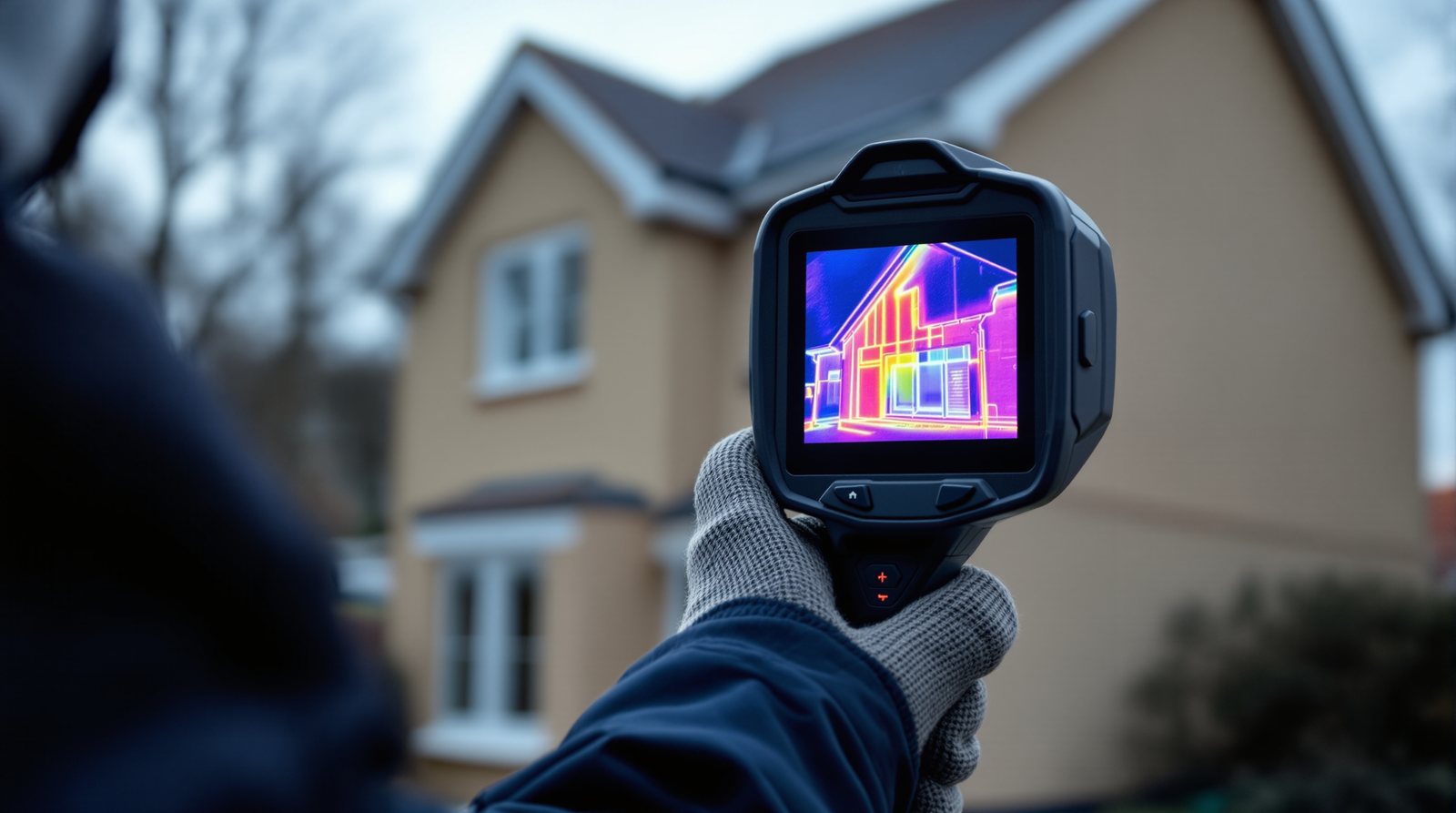
How to get an energy certificate: 4 steps
Getting an energy certificate for a house takes four steps:
- Documents. The expert needs access to the building and documents: the building design or the cadastral survey file (plans and description of the building prepared by a surveyor for the cadastre), designs or diagrams of the heating and other engineering systems (ventilation, water supply, electricity), and bills or reports on energy used.
- Inspection. The expert inspects the house: checks the condition of walls, roof, windows and engineering systems — everything that affects energy use.
- Calculation and recommendations. The expert calculates the building's energy performance, determines the class and prepares recommendations for improvements that pay back.
- Registration. The expert registers the certificate in the building energy certificate register, and the document receives a registration number.
For a new building the process is similar, except that the calculation is based on the design and the temporary certificate is attached to the construction intention documents.
Source: Cabinet Regulation No. 222, Paragraphs 3, 5, 20 and 44–47.
From our practice
- When commissioning a house, we order the energy certificate from an independent expert ourselves and add it to the other commissioning documents.
- For a summer house or garden house, we first check whether a certificate is needed at all, before the client pays an expert.
- Before the expert's visit, we prepare the design and as-built documentation so the calculation is based on actual materials, not assumptions.
Frequently asked questions
How long is an energy certificate valid?
An energy certificate is valid for 10 years, a temporary energy certificate for 3 years. If a new certificate is issued for the building, the previous one ceases to be valid.
Law on the Energy Performance of Buildings, Section 8, Paragraph seven.
What is a temporary energy certificate and when is it needed?
A temporary energy certificate is prepared during the design stage based on the planned performance of the building. An independent expert does this: the certificate is registered in the building energy certificate register and attached to the construction intention documentation. When the building is commissioned, the temporary certificate is updated based on actual performance. A temporary certificate is valid for 3 years, a regular one for 10 years.
Law on the Energy Performance of Buildings, Section 8, Paragraph seven; Cabinet Regulation No. 222, Paragraphs 3.3 and 4.3.
Do I need a certificate to sell an apartment?
Yes, if the apartment is in a building already in use, is larger than 50 m² and has its own energy or heat metering. In a new, reconstructed or renovated building there is no 50 m² threshold — it is enough that the apartment is designed with its own energy or heat metering. In a building already in use, a separate certificate is not needed if the whole building has a valid energy certificate or temporary energy certificate.
Law on the Energy Performance of Buildings, Section 7, Paragraph one, Clauses 2 and 4, and Paragraph 2.¹.
Does a summer house need an energy certificate?
No, if it is used or intended for use less than four months a year, or only for a limited time each year, and its expected energy use is below 40 kWh per m² a year.
Law on the Energy Performance of Buildings, Section 3, Paragraph two, Clause 4.
Who prepares the energy certificate?
An independent expert in building energy performance. Their registration number is stated on the certificate.
Law on the Energy Performance of Buildings, Section 12; Cabinet Regulation No. 222, annexes.
How much does an energy certificate cost?
The price depends on the size and type of the building and on which documents already exist. We give an exact price during a consultation.
Building, rebuilding or legalising a house?
If your project needs an energy certificate, Volko Engineering arranges it together with an independent expert — you do not need to look for another specialist. Find out your exact route and price in a consultation. We work in English.
Send a request →Prepared by: the VOLKO team.
Sources (official texts in Latvian)
1. Ēku energoefektivitātes likums (Law on the Energy Performance of Buildings) — likumi.lv/ta/id/253635 (version in force from 02.11.2020, checked 29.09.2026)
2. Cabinet Regulation No. 222 of 08.04.2021 „Ēku energoefektivitātes aprēķina metodes un ēku energosertifikācijas noteikumi“ (Methods for calculating the energy performance of buildings and building energy certification rules) — likumi.lv/ta/id/322436 (version in force from 19.06.2026, checked 29.09.2026)
This article is for information only and does not replace advice on a specific building. Names of legal acts and quotations are our own translations; only the Latvian text is legally binding. Regulations checked on likumi.lv 29.09.2026.
Other articles
Commissioning
Commissioning a house in Latvia: documents and steps →
Which route applies to your house and where the process gets stuck.